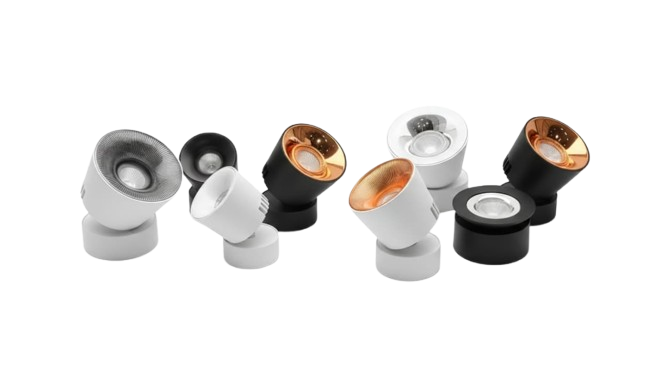
Powerful Illumination: A 100W high bay light typically delivers a substantial lumen output, ranging from 10,000 to 15,000 lumens or even higher, providing excellent brightness for large areas like warehouses, factories, gymnasiums, retail stores, and workshops.
Energy Efficiency: These lights consume significantly less energy than traditional high bay fixtures, potentially reducing electricity costs by up to 80% compared to metal halide lights.
Long Lifespan: With a lifespan of 50,000 hours or more, 100W LED high bay lights offer long-lasting performance and minimize the need for frequent maintenance and replacements.
Optimized Light Distribution: High-quality optical lenses, often made of polycarbonate or tempered glass, ensure uniform light distribution and minimize glare, enhancing visibility and comfort in the illuminated space.
Durable and Robust Construction: Constructed with sturdy materials like die-cast aluminum housing for efficient heat dissipation, these lights are designed to withstand the demands of industrial and commercial environments.
Weather and Dust Resistance: Many 100W LED high bay lights are rated with high Ingress Protection (IP) ratings, commonly IP65 or IP66, indicating resistance to dust and water splashes.
Wide Beam Angle Options: Common beam angles like 90° or 120° are available, providing wide coverage in large spaces or a more focused beam depending on the application.
Dimmable Functionality: Some models include dimming capabilities, allowing for adjustment of brightness levels to suit specific needs or to achieve further energy savings.
II. Benefits
Cost Savings: Reduced energy consumption and long lifespan lead to significant cost savings on electricity bills and maintenance expenses.
Improved Visibility and Safety: Bright, uniform lighting enhances visibility, which can contribute to a safer work environment in industrial and commercial settings.
Enhanced Productivity: Proper lighting can improve worker morale, reduce eye strain, and boost overall productivity in warehouses, factories, and other large spaces.
Environmental Friendliness: LED technology is mercury-free and produces lower carbon emissions, supporting sustainable practices.
Instant Illumination: LED lights offer instant full brightness, unlike traditional fixtures that require warm-up time.
III. Applications
100 watt LED high bay lights are ideal for:
Warehouses and storage facilities
Manufacturing plants and factories
Gymnasiums and sports arenas
Retail stores and supermarkets
Exhibition halls and convention centers
Workshops and assembly lines
By combining high performance, energy efficiency, and durability, 100 watt LED high bay lights offer a compelling lighting solution for various demanding industrial and commercial environments
Beam Angle: The angle at which light is emitted from the fixture. For high bay lights, the beam angle is critical for effective illumination in tall spaces.
Common Beam Angles: The most common beam angles for 100 watt LED high bay light lens models are 60°, 90°, and 120°.
Effect of Beam Angle:
Narrow Beam Angles (e.g., 60°, 90°): Ideal for very high ceilings or to create focused illumination in specific areas. They provide a high lux level directly below the fixture.
Wide Beam Angles (e.g., 120°): Better suited for lower ceilings in large areas, where wider coverage and more uniform light distribution are desired.
III. Lens types and optical designs
Optical Lenses: These are specifically designed to manipulate the light from the LEDs, optimizing its output, improving uniformity, and reducing glare.
Convex Lenses: Thicker in the center, these lenses converge light rays, creating a more focused beam.
Aspheric Lenses: These lenses have a complex shape for better control over light distribution and reduced optical aberrations, resulting in clearer and more focused light output.
Fresnel Lenses: Lightweight and thin, they are efficient for applications requiring large apertures without the bulk.
TIR (Total Internal Reflection) Lenses: These lenses are highly efficient at directing light using internal reflection.
IV. Design features
High Efficiency: Lenses maximize the amount of light utilized from the LED chip, reducing wasted energy.
Uniformity: Designed to distribute light evenly across the target area, eliminating dark spots and shadows.
Glare Reduction: Optical designs help mitigate glare, which is crucial in environments where workers operate machinery or require clear visibility.
Heat Management: Some lens designs and materials also contribute to heat dissipation, ensuring the longevity and stable performance of the LED chips.
In summary, the lens models used in 100 watt LED high bay lights are chosen based on the specific requirements of the application, taking into account factors like ceiling height, desired light distribution, beam angle, and environmental conditions. They play a vital role in optimizing the fixture’s performance, energy efficiency, and overall lighting quality in high-ceiling environments
₹1,200.00Original price was: ₹1,200.00.₹999.00Current price is: ₹999.00.
50 watt LED street lights are physically located in the wrong storage bin, shelf, or section within the warehouse or storage area.
For example, a box containing 50 watt LED street lights might be mistakenly placed in an area designated for 30 watt or 200 watt models.
2. Misidentification or mislabeling
Incorrect labels are applied to the physical street light fixtures or their packaging, indicating a different wattage, model number, or specification than the actual product.
For instance, a label might erroneously identify a 50 watt street light as a 100 watt unit, leading to confusion and potential errors during order picking.
3. Discrepancy in quantity
The number of 50 watt street lights physically present in a particular location doesn’t match the quantity recorded in the inventory system.
This could be due to errors during receiving, shipping, cycle counting, or potential theft or loss.
4. Mixing of similar products
If there are several types of street lights that are visually similar, like 50 watt models with slightly different features or color temperatures, they might be accidentally mixed together.
This makes accurate picking and packing challenging, leading to incorrect shipments.
Impact of such discrepancies
Order Fulfillment Delays: Misplaced or misidentified 50 watt LED street lights can cause delays in fulfilling customer orders, impacting customer satisfaction.
Incorrect Shipments: Customers might receive the wrong wattage or model of street light, leading to returns, exchanges, and additional shipping costs.
Inefficient Operations: Searching for missing street lights and rectifying errors takes up valuable time and resources, decreasing overall warehouse efficiency.
Financial Losses: Discrepancies can lead to lost sales, increased return costs, and potential write-offs of unusable or obsolete inventory.
Addressing and preventing “product sort discrepancies”
Improved Labeling and Identification: Implement clear, standardized labeling practices and consider using barcode or RFID technology for accurate product identification.
Regular Cycle Counting: Conduct frequent, small-scale physical counts to identify and correct discrepancies promptly.
Optimized Warehouse Layout: Arrange your warehouse logically, placing similar products together and ensuring clear signage for each location.
Enhanced Employee Training: Train staff on proper inventory handling, identification, and system usage to minimize human errors.
Utilize an Inventory Management System: Implement or upgrade to an efficient inventory management system that can track inventory in real-time and provide accurate data.
Implement Quality Control Checks: Introduce checks at various stages, from receiving to picking and packing, to ensure the correct street lights are being handled.
By implementing these strategies, businesses can significantly improve inventory accuracy for 50 watt LED street lights, leading to smoother operations, reduced costs, and improved customer satisfaction